
Large Concrete Blocks for Sale in the U.S. (Interlocking, Heavy-Duty, Built to Last)
Big concrete blocks that lock together, hold their ground under pressure, and keep performing long after installation. No mortar. No guesswork. Just solid, stackable strength you can rely on. Detachment 5 Block supplies large concrete blocks for sale across the United States, direct from the source, ready for retaining walls, storage bins, and heavy-duty site work. Whether you’re sourcing big concrete blocks for sale for a retaining wall or planning a large-scale project, we’ll help you lock in the right solution fast.
What You’re Actually Buying
At a glance, these look like giant concrete blocks, and that’s basically what they are. But they’re not random chunks of concrete. These are large precast concrete blocks (often called mafia blocks or bin blocks) made to stack, lock, and hold serious weight without shifting.
Each block is poured in a controlled setting, cured for strength, and built with a purpose: to act like a modular building system. Instead of cutting, mortaring, or waiting on cure time, you’re working with big concrete blocks that are ready to place the moment they hit your site.
How the interlocking system actually works
Think of it like a scaled-up version of stacking bricks but engineered for heavy-duty use.
- Blocks are cast with raised knobs or recessed grooves
- When stacked, they fit into each other naturally
- The weight of each unit helps lock the structure in place
No mortar. No adhesive. No complicated install steps.
Once placed, the blocks stay put because of:
- their weight
- the interlock design
- and the way they distribute pressure across the wall
That’s why contractors use them for fast builds where stability matters more than anything else.
Where they’re used (and why they work)
These aren’t decorative pieces, they’re workhorses.
- Retaining walls: create stable, freestanding walls that hold back soil without needing a poured foundation in many cases
- Storage bins: stack them into bays for sand, gravel, salt, or bulk materials
- Barriers: line roads, job sites, or perimeters with solid, impact-resistant mass
When people search for concrete retaining wall blocks, large, this is what they’re usually after: something that goes up fast, holds strong, and doesn’t become a problem later.
Built for Real-World Performance (Not Just Specs)
Suppliers love to throw around PSI ratings and technical mix designs. Those numbers matter, but the real test is how a block behaves once it’s in the dirt. On a job site, you aren’t looking for a lab report; you’re looking for a structure that won’t move.
Handling Pressure Without Shifting
When you stack these units into a retaining wall, they face constant force from soil, water, and weight. Our blocks handle that pressure by spreading the load across their entire surface and using their sheer mass to resist pushback. Because they lock into each other, you get a wall that stays aligned rather than one that creeps, leans, or separates over time.
Resisting Freeze-Thaw Cycles
In colder regions, water is the enemy. It gets into pores, freezes, expands, and eventually cracks weaker materials. The density and curing process used for these large cement blocks limit the internal damage. Instead of crumbling after two or three winters, the structure holds its integrity season after season.
Durability Without the "Age Out"
Some materials look great on delivery but start failing quietly after a year or two of exposure. These blocks are built for the long haul. They’re expected to sit in the rain, sun, and snow while carrying massive weight continuously. They require almost zero maintenance and don’t lose their structural role over time. That’s the difference between a product that looks good in a catalog and one that actually works on-site.
Common Use Cases (Built for Real Work)
These blocks aren’t bought for looks; they’re bought because something on-site needs to stay in place. Whether you’re fighting soil pressure, organizing bulk materials, or securing a perimeter, mass is the only thing that matters.
Retaining Walls
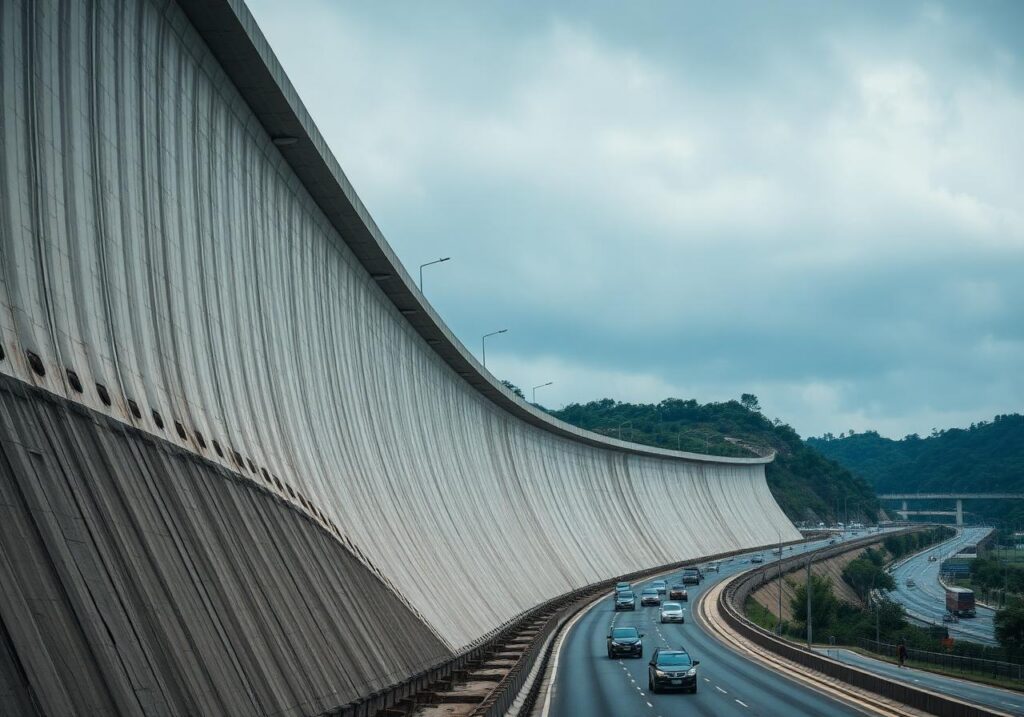
This is the primary job for large retaining wall blocks. They are used to hold back soil where poured concrete is impractical or where project speed is the priority. These units solve erosion control issues and handle elevation changes without the long cure times of traditional walls. Instead of building complicated reinforced systems, your crew can stack blocks large enough to handle serious pressure, resulting in usable land that stays put.
Material Storage Bins
On-site space is a commodity. These blocks allow you to create modular bins for gravel, sand, salt, or recycling zones. Because the system is stackable and mortar-free, you can adjust the layout as your inventory changes rather than being locked into a permanent, fixed structure. This leads to cleaner sites, faster material handling, and far less wasted space.
Industrial & Agricultural Applications
Beyond the construction site, these blocks are workhorses for bulk handling and heavy daily use. They are frequently used for silage storage, grain separation, and equipment yard organization. The benefit here is long-term durability; they won’t crack under shifting loads or break down from constant exposure, providing stable, reusable infrastructure that adapts as your operations grow.
Traffic & Security Barriers
When you need to control access or protect a site, you need a physical weight that won’t shift. These blocks act as lane separators, perimeter security, and vehicle impact zones. Unlike lighter plastic or wood barriers, these provide a physical stop point that holds its position under pressure, ensuring a safer site without the need for complex infrastructure.
Block Types & Finishes
Not every project needs the same type of block. Some jobs are purely structural. Others need strength and a finished appearance that works in visible spaces. Detachment 5 Block offers options built for both.
Standard Structural Blocks
Built for function first. These are the go-to choice for contractors, developers, municipalities, and site managers who need dependable wall systems without overcomplicating the install. Standard structural blocks are commonly used for:
- large retaining walls
- material storage bays
- equipment yard separation
- perimeter barriers
- site control and traffic management
Their main advantage is simple: speed + strength. You get solid, large-format blocks that are easy to move into place and built to perform under heavy load conditions. For projects where appearance is secondary to durability, these are often the most efficient option.
Interlocking / Stackable Blocks
Designed to simplify installation while improving wall stability. These blocks are formed with an interlocking connection system that allows each unit to naturally align with the next. Instead of relying on mortar or adhesives, the blocks stack with built-in connection points that help:
- keep rows aligned
- Reduce shifting between layers
- improve overall wall integrity
The system is straightforward:
- Set the base course
- Stack the next row into the locking points
- Continue building to the project height
That’s it.
This makes interlocking blocks ideal for:
- faster installations
- temporary or movable structures
- projects requiring future expansion or reconfiguration
It’s one reason large retaining wall blocks remain a preferred solution for contractors who want efficiency without sacrificing performance.
Specialty Finishes
Most suppliers stop at plain gray structural blocks.
Detachment 5 Block offers finish options that bring the same structural performance with a more polished appearance ideal for projects where aesthetics matter.
Rock Face
A rugged, textured finish that adds depth and dimension.
Best for:
- commercial landscapes
- entrance walls
- visible retaining walls
- decorative site boundaries
Rock Face gives walls a more natural, finished look while maintaining the strength expected from structural concrete systems.
Brick Finish
A cleaner, more traditional architectural appearance.
Best for:
- urban developments
- streetscapes
- mixed-use projects
- commercial exteriors
This finish helps projects blend more naturally into built environments where raw concrete may feel too industrial.
Stacked Stone Finish
Textured to resemble layered stonework.
Best for:
- upscale landscape installations
- visible retaining systems
- residential-adjacent commercial spaces
This option gives buyers the strength of concrete with a more premium finished appearance.
For projects where plain utility blocks aren’t enough, specialty finishes create a clear upgrade path without changing the structural benefits of large cement retaining wall blocks.
Sizes, Weight & Configurations
Choosing the right block size is just as important as the product itself. While larger blocks provide more stability and coverage per placement, they also require heavier machinery. Getting the dimensions right from the start ensures your installation stays efficient and your equipment costs stay under control.
Dimensions (H x W x L) | Est. Weight | Best Use Case |
2′ x 2′ x 3′ | 1,000 lbs+ | Short walls, tight spaces, and flexible layouts |
2′ x 2′ x 4′ | 2,800 lbs+ | Commercial bays and standard retaining walls |
2′ x 2′ x 6′ | 5,000 lbs+ | Industrial storage and high-load infrastructure |
Mass Equals Stability
The weight of these blocks is what makes them work. This massive holding power allows the units to resist shifting and handle constant soil pressure without needing complex foundations. When you’re sourcing these, remember you’re buying more than just concrete—you’re buying the gravity needed to keep your site secure.
Selecting the Right Scale
Smaller configurations are perfect for projects where handling needs to be agile or space is at a premium. Mid-size blocks generally offer the best balance of versatility for most commercial job sites. For tall walls or heavy-duty industrial barriers, large-format blocks are the standard because they minimize movement and speed up the building process. Choosing the correct size upfront is the easiest way to avoid layout headaches and equipment mismatches later.
Why Contractors Choose Detachment 5 Block
Selling concrete is the easy part. What matters is having a supplier who shows up when the project is on the line.
- Veteran-Owned Reliability: We operate with the discipline job sites demand, while our SDVOSB certification helps buyers meet strict procurement requirements.
- Direct-from-Source Pricing: You avoid middleman markups and coordination delays by dealing directly with the supplier.
- Uniform Quality: Every block maintains consistent strength and dimensions, removing guesswork during installation and stacking.
- Nationwide Logistics: We ship across the country, serving as a single-source vendor for projects in any region.
- Technical Support: You get actual help with block selection and site planning, not just a generic sales pitch.
On-Site Services (We Don’t Just Drop Blocks)
Most suppliers think their job ends when the truck leaves the yard. We stay involved to make sure your project actually moves forward.
Delivery Coordination
Getting 5,000-lb blocks to a site is about more than distance; it’s about access and timing. We coordinate delivery schedules that match your crew’s timeline and plan for site access issues before the truck arrives. No vague “delivery windows”—just a solid plan so your guys can work.
Placement & Layout Support
If your site isn’t straightforward, we provide guidance on:
- Placement Strategy: Organizing the drop-off to minimize double-handling.
- Stacking Layout: Ensuring the first course is set for long-term stability.
- Handling: Specific recommendations for moving large-format units safely.
Reducing Job-Site Risk
Most delays stem from planning gaps, not the product. We help you dial in your quantity planning and block selection based on your specific load conditions. The goal is simple: fewer surprises, zero rework, and a smoother build from start to finish.
Ordering, Delivery & Availability
Buying heavy materials shouldn’t be a headache. We keep our process direct and predictable to help contractors meet tight deadlines.
Simple Ordering
We’ve cut out the unnecessary layers to get you moving faster:
- Consultation: Tell us your project specs, and we’ll confirm the right block type and quantity.
- Clear Quoting: You receive a transparent price and a logistics plan.
- Coordinated Delivery: We handle the scheduling so you can focus on the build.
Lead Times & Logistics
Timing is everything on-site. While lead times depend on your order size and location, we prioritize quick scheduling to prevent downtime. We provide nationwide delivery, acting as a single vendor for contractors managing multiple sites across the country.
Bulk & Large-Scale Projects
For high-volume infrastructure or commercial builds, we offer:
- Staged Deliveries: Blocks arrive in phases to match your construction schedule.
- Bulk Shipments: Coordinated logistics for massive retaining wall systems or site barriers.
- Consistency: Predictable quality across every load, from the first block to the last.
Get the Right Blocks, Without the Guesswork
If you’re sourcing large concrete blocks for sale, the difference isn’t just in the product; it’s in who you’re getting it from. At Detachment 5 Block, you’re working with a Veteran-Owned (SDVOSB) supplier focused on reliability, consistency, and getting materials to your site without delays or confusion.
FAQs
What are large concrete blocks used for?
They’re used for retaining walls, material storage bins, barriers, and industrial site structures. Basically, anywhere you need heavy, stable, stackable mass.
Are interlocking concrete blocks permanent?
They can be. Once stacked and loaded, they’re highly stable. Some projects are permanent, others are designed to be reconfigured later depending on site needs.
How much do large concrete blocks weigh?
Most range from around 1,000 lbs to over 5,000 lbs, depending on size and configuration. The weight is what gives them stability in retaining and barrier applications.
Do you need mortar for large retaining wall blocks?
No. Interlocking systems are designed to stack securely without mortar or adhesives.
How long do concrete retaining wall blocks last?
Decades in most conditions. They’re designed to handle weather exposure, soil pressure, and freeze-thaw cycles with minimal degradation.
What size block do I need for a retaining wall?
It depends on wall height, load pressure, and site conditions. Smaller blocks are used for shorter walls, while larger units are used for commercial or heavy-load retaining systems.
Do you deliver large concrete blocks nationwide?
Yes. Delivery is available across the United States with coordinated logistics based on project size and location.